


V-Shape Coral Raceways for Reef Restoration
Our unique v-shape coral raceways are designed to improve coral growth and support large-scale reef restoration.
What Is a V-Shape Coral Raceway?
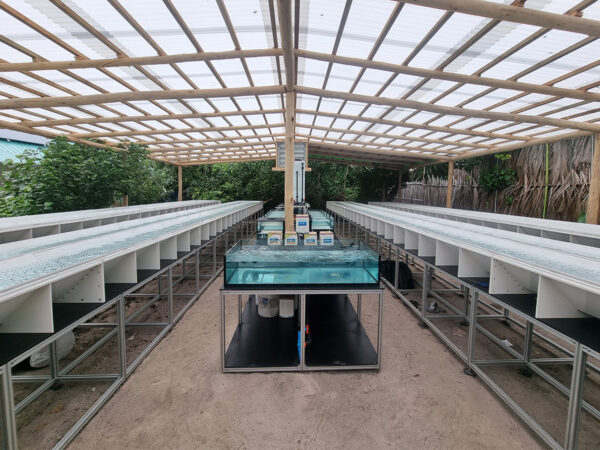
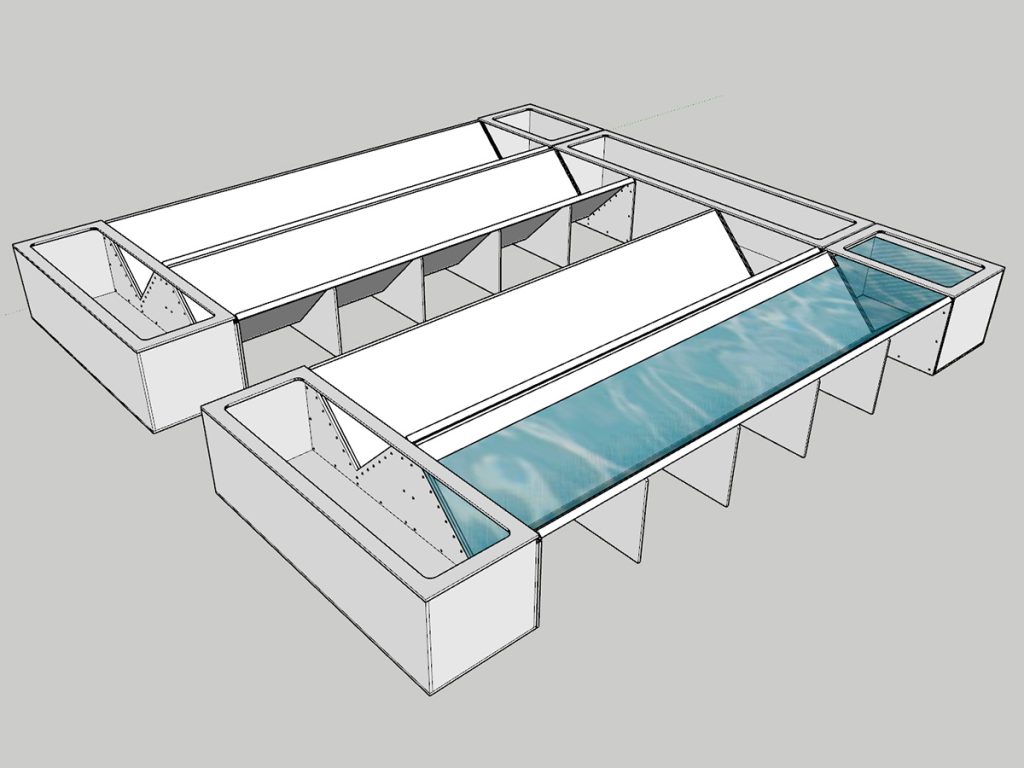
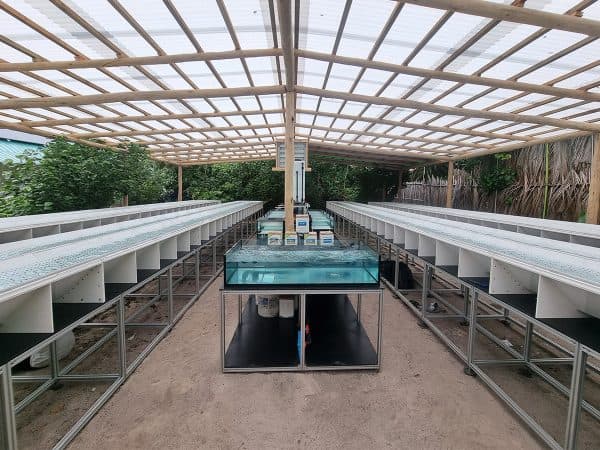
V-shaped coral raceways are modular, circuit-style systems designed for efficient juvenile coral grow-out. Sloped sides direct detritus to the base for easy cleaning while maintaining optimal flow around the corals. Coral plugs are housed in removable maternity trays, providing an organised growing environment that simplifies management and reduces hands-on maintenance.
Paired with our coral spawning and microfragmentation practices, V-shaped raceways provide an efficient approach to rearing healthy corals until they are ready for in-situ transplantation onto natural reefs.
What Are V-Shape Coral Raceways Used For?
Coral Restoration Projects
V-shaped coral raceways are designed to integrate into land-based coral restoration facilities of varying sizes. Their modular design allows projects to expand their systems as requirements grow, providing a practical and scalable piece of infrastructure for both developing and established restoration programmes.
Juvenile Coral Grow-Out
Following a successful spawning event, juvenile corals need time to establish and mature. V-shaped raceways provide a dedicated growout space where these young corals can develop under stable conditions, allowing for a smooth transition from growout, to the reef.
Coral Microfragmentation
V-shaped coral raceways can be used not only to grow juvenile spawned corals, but also for established propagation methods such as micro-fragmentation. Their accessible design provides an ideal environment for organising, monitoring and growing large numbers of coral fragments before eventual outplanting onto the reef.
Coral Propagation
Coral propagation often requires large numbers of fragments to be housed efficiently while maintaining easy access for regular husbandry. V-shaped raceways provide a practical working environment for fragmenting, mounting and managing corals as they grow, making them well suited to both restoration and research facilities.
How Do V-Shape Coral Raceways Work?
Like a meandering river, water is driven continuously through the raceway by a powerful, highly efficient circulation pump. The sloped walls optimise flow around the corals, while the open centre allows water to move freely through the V-shaped channel, carrying vital nutrients and continually flushing the coral fragments. Detrital matter naturally settles at the base of the V, where it can be easily removed, simplifying cleaning and ongoing maintenance.
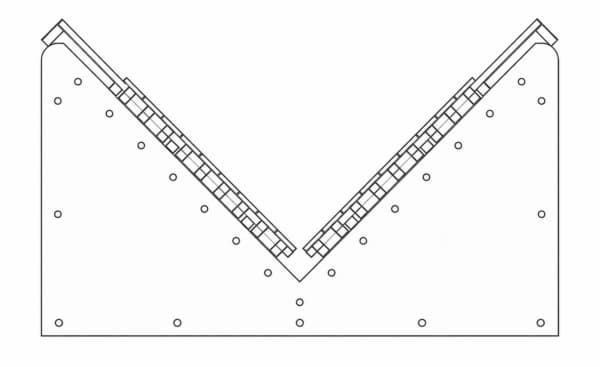
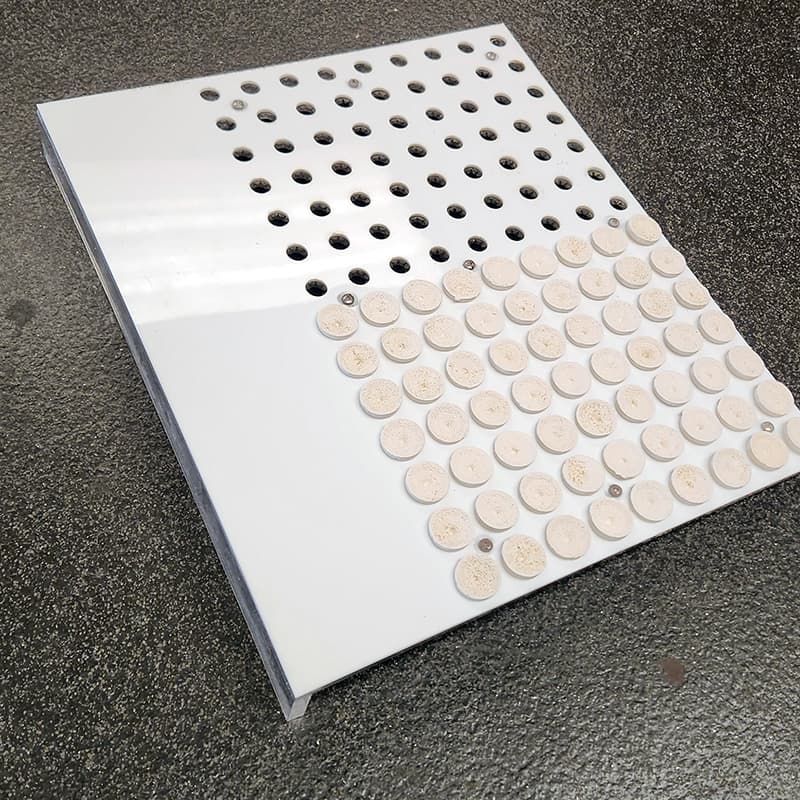
Coral fragments are secured within specially designed maternity trays positioned along the sloped walls of each V-section. Each plug sits within a precision CNC-cut opening, creating a tight, secure fit that prevents the plugs from falling out even when the entire maternity tray is inverted. This allows complete trays to be safely removed, handled and transferred for inspection, cleaning and coral maintenance.
As new corals enter the raceway, maternity trays can be moved progressively through the system. This creates a simple production line, where newly introduced juveniles begin at one end and gradually progress through the raceway as they grow, with those furthest along being closer to reaching a suitable size for outplanting.
Why Were V-Shape Coral Raceways Developed?
As sea temperatures continue to rise and coral bleaching events become more frequent and severe, the need for effective coral restoration solutions is increasing. Restoration organisations are being asked to grow, manage and outplant greater numbers of corals, placing more demand on the land-based systems used to support this work. We wanted to develop a raceway that could help meet that growing demand by making better use of available space while remaining practical to operate, maintain and scale.
V-Shape Raceways in Real Coral Restoration Projects
Soneva Fushi - Maldives
We completed this project at Soneva Fushi in May 2024, installing four runs of V-Tray raceways split across two independent systems, each with dedicated filtration. The raceways have since supported the grow-out and outplanting of thousands of juvenile corals spawned in the coral spawning laboratory we installed two years earlier. The facility also includes a dedicated heat experiment system for trialling and studying heat-tolerant corals.
Red Sea Global - Saudi Arabia
Completed in April 2024, this project combined purpose-built container laboratories for coral spawning and larval settlement with our V-shaped coral raceways for the next stages of growth. Once settled, juvenile corals could be transferred into the V-Trays to acclimatise and grow before eventually being outplanted onto the reef, creating a system designed to support the corals through multiple stages of the restoration process.
Six Senses Laamu - Maldives
Completed in November 2024, we installed V-shaped coral raceways for Six Senses in the Maldives. The V-Trays operate on a flow-through system, receiving a continuous supply of natural seawater to support juvenile coral growth before outplanting onto the reef. We continue to return to the facility for scheduled maintenance, ensuring the systems remain reliable and operate as intended.
Who Created V-Shape Coral Raceways?
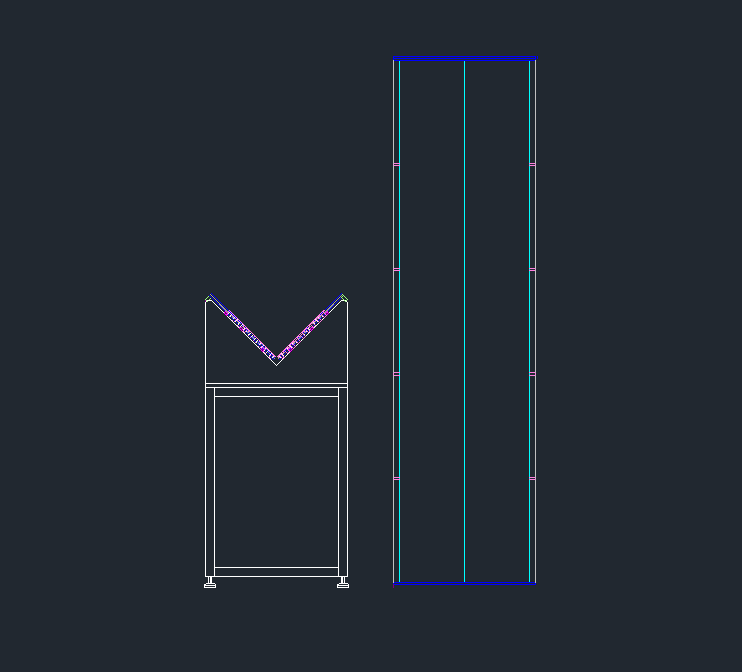
We developed the V-shaped coral raceway concept from the ground up, from the initial idea and early CAD designs through to the first working prototypes. Here’s a look at how the concept developed from those first drawings into the system we use today.
The Development of the Concept in 2022
The Initial Design
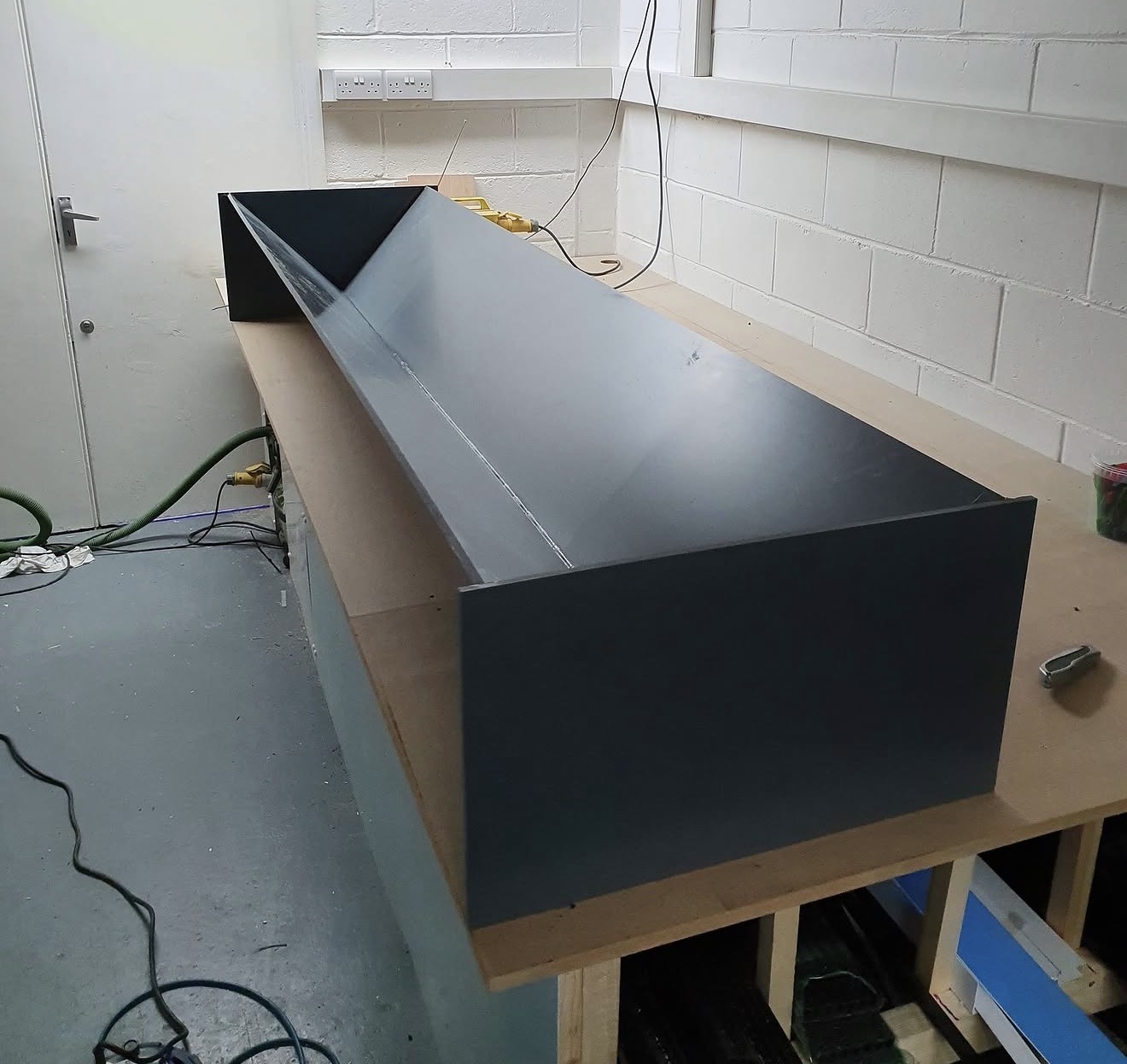
In 2022, Vincent Thomas designed the first V-shaped coral raceway. After months of exploring better ways to grow juvenile corals efficiently, the idea for the V-Tray system was born.
First Prototype
In 2022, we brought the idea to life with our first full prototype, constructed from acrylic. It gave us the opportunity to test the V-Tray concept in practice and laid the foundations for everything that followed.
Prototype 2
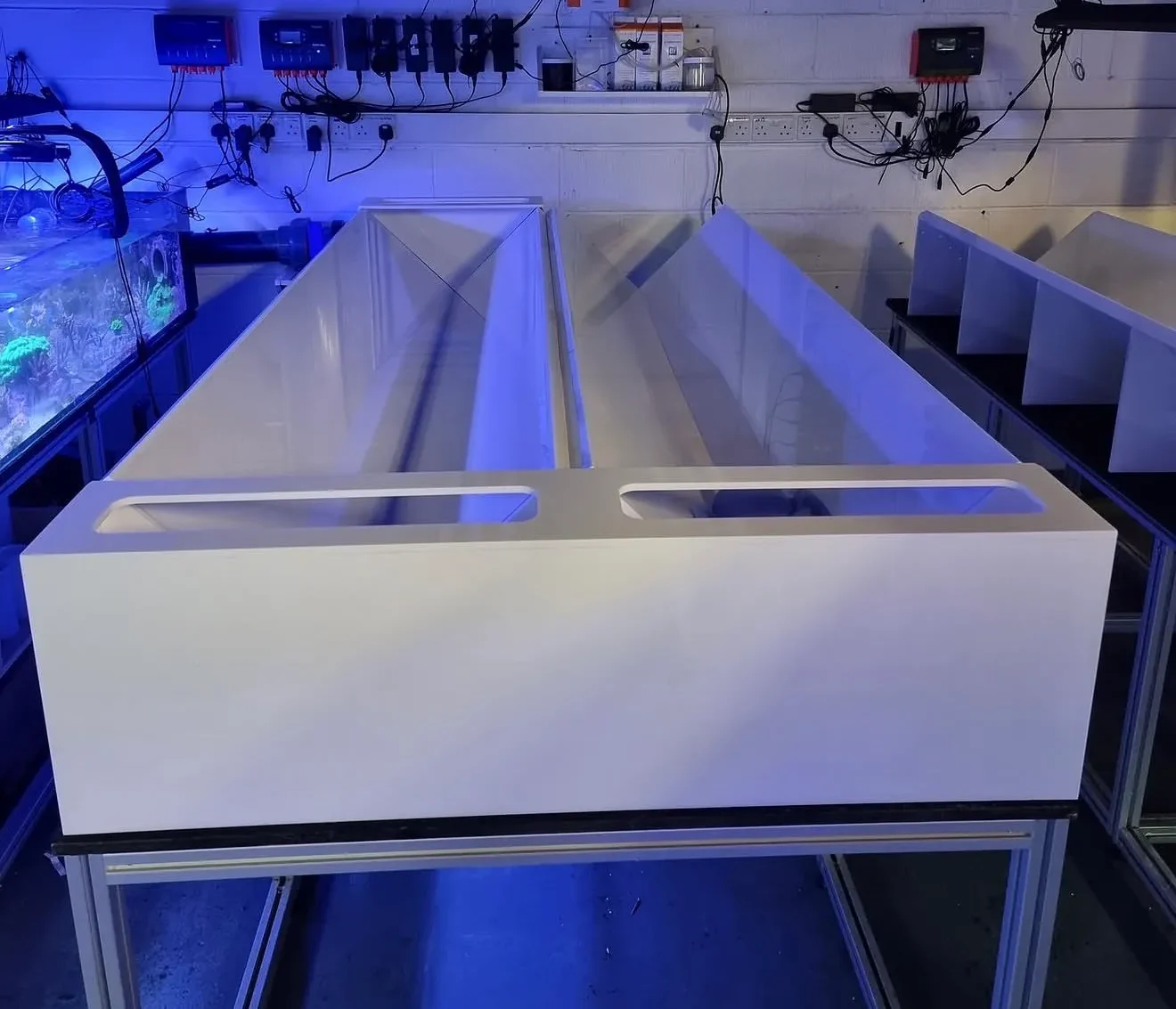
Once the first prototype proved that the concept could work, we invested in developing a second version, refining the original design with a number of improvements and a more finished appearance.
Maternity Trays
With the V-Trays working well, we turned our attention to housing juvenile corals on the sloped walls. This led to our removable maternity trays, with frag plug materials rigorously tested using ICP analysis.
Final Prototype
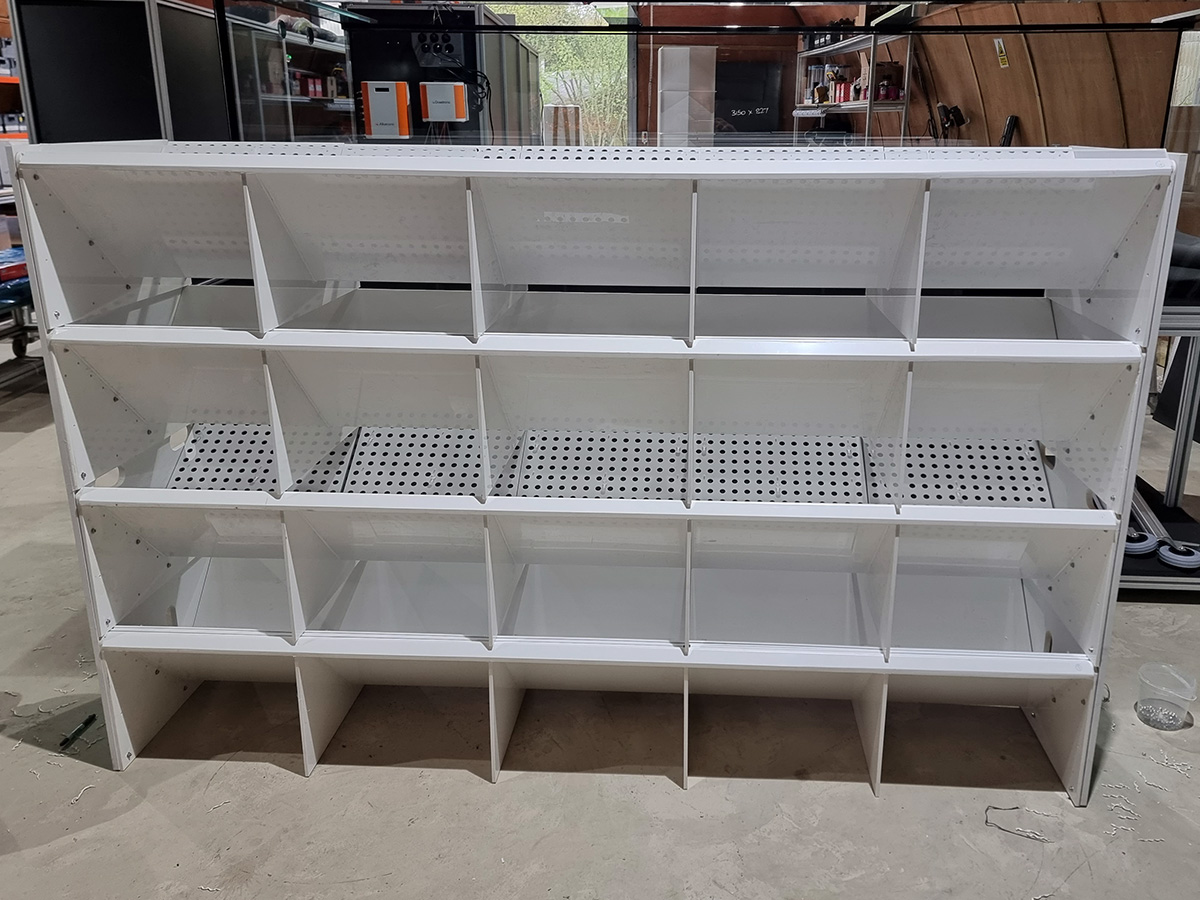
For the final prototype, we moved away from acrylic and introduced a new, more robust material, improving the overall strength and durability of the V-Tray while retaining the proven design.
Implementation
After years of rigorous testing and refinement, the V-Tray system was ready to be used in coral restoration facilities around the world. What began as Vincent’s idea had developed into a proven system, designed, tested and built specifically for coral restoration.
Benefits of V-Shape Coral Raceways
Modular Systems
Being modular, the systems can be expanded later, without the need for additional filtration. This can be modified depending on the space available.
Minimized Sedimentation Stress
The V-shape, forces detritus to settle in the bottom of the V-section, making maintenance and cleaning simple. Reduces coral mortality and ensures optimal water flow.
Improved Dynamic Flow
With the maternity trays sitting at 45 degrees, water flows through the centre of the corals, keeping flow laminar and consistent throughout the entire system. This has been adapted to allow unique flow patterns and strengths along the length of the V tray to suit the corals being housed.
High Capacity
Each 2-meter section holds up to 1,260 coral plugs, supporting up to 30,000 plugs in a single system.
Micro Fragmentation And Grow Out
The V shaped raceways are perfect for practices such as micro fragmentation and propagation of coral due to the style of the maternity trays and coral plugs available. Maternity trays can be swapped from one side to the other during maintenance, changing the direction of which the flow hits the coral.
Completely Bespoke
One of the main benefits of our V-Trays is their flexibility. Each system can be customised around the requirements of the facility, with the option of either closed-loop or flow-through operation where natural seawater is available. Lighting can also be tailored to the location, using natural sunlight with adjustable canopy shading or dedicated LED lighting where required.
Maternity Trays
The Maternity Tray is designed to hold large numbers of coral frags efficiently. A soft silicone layer grips each frag plug securely, keeping them firmly in place during handling and transportation.
We have developed our frag plugs specifically to help increase coral larval settlement, with approximately 1.5 mm dimples that have been carefully tested to determine the most effective depth for encouraging settlement. The plugs have also undergone rigorous testing using our in-house ICP-OES laboratory to ensure the ceramic material does not leach unwanted contaminants into the water. Designed to work seamlessly with our maternity trays, each plug fits precisely into the CNC-machined cutouts, holding juvenile corals securely in place throughout the grow-out stage.
Each tray can also be clearly labelled with species information, settlement or fragmentation dates and other relevant data. This makes large numbers of corals easier to identify, monitor and manage without individually handling them unnecessarily.
The Future of V-Shape Raceways in Coral Restoration
We aim to install many of these units in land-based coral restoration facilities around the world. Paired with our original coral spawning systems, they can provide a practical environment for growing, fragmenting and developing corals before they are eventually returned to the reef. We believe systems like these could become an important piece of the jigsaw in the ongoing effort to restore and protect coral reefs for the future.